
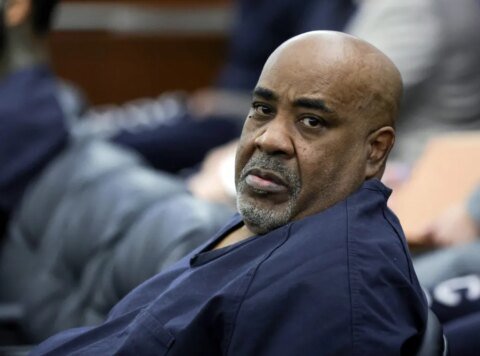



THE BIG STORY: It took 30 years, but someone has finally been convicted of the murder of Tupac Shakur.
That someone is Duane “Keffe D” Davis, a former Compton gang leader who prosecutors say orchestrated the 1996 drive-by as an “act of revenge” amid an East-West rap feud that had come to overlap with a real-world Los Angeles gang war.
Davis may have been charged by Las Vegas prosecutors, but he was essentially convicted by himself. Mistakenly believing he was shielded by immunity agreements, the ex-gangbanger spent years bragging about his own role in the famous crime. And during a two-week trial, jurors heard those damning confessions over and over.
“For nearly 18 years, Duane Davis has told the police, television, books, YouTube interviewers, anybody that will listen, he has told that he is responsible for the murder of Tupac Shakur,” a prosecutor said Monday. “Tell him you hear him. Find him guilty.”
After just a few hours of deliberations, the jury did exactly that. What happens next for Davis will be decided in the weeks ahead, but he is almost certain to spend most of the rest of his life in prison.
For decades, the killings of Tupac, The Notorious B.I.G. and Jam Master Jay — three of hip-hop history’s most legendary figures — remained cold cases. But over the past few years, men accused of Jay’s murder and now Tupac’s slaying have been charged and convicted.
The obvious question: Is Biggie’s killer next?
Other top stories this week…
— Call it the Suno paradox: While the AI firm argues in court that it can train models for free on every song ever made, it’s also striking deals with the music business to pay for training data. So which is it?
— In other Suno news: Jason Isbell and other artists filed a class action accusing the AI lab of violating their likeness rights by encoding their entire musical personas as tokens in its model.
— Six years after DMX’s death, his estate’s lawyers are battling a longtime friend over a trove of unreleased recordings and his claim to be a co-writer of DMX’s breakout hit.
— On the day Dolly Parton died, a judge cited the singer as he struck down a Texas law restricting drag shows — ruling it was so broad that even Dolly might have faced criminal penalties for how she dressed.
— Lil Durk’s murder-for-hire trial got underway with a first week that featured text messages, an unreleased music video and key testimony from a former member of the Chicago rapper’s OTF crew.
— Lizzo won a ruling dismissing a harassment and discrimination lawsuit filed by former tour wardrobe designer Asha Daniels, rejecting accusations that she faced a “culture of racism and bullying.”
— Jermaine Dupri quickly dropped a lawsuit he had filed against Sony Music that claimed he was owed $18 million in unpaid royalties tied to albums from Mariah Carey, Usher and others.
— Here’s a stranger-than-fiction legal saga featuring Russell Simmons, his ex-wife, her now-incarcerated second husband and the DOJ battling over valuable shares in the energy drink brand Celsius.
— Selena Gomez and her lawyers hit back hard at claims that she was involved in fraud at the mental health startup Wondermind, calling the lawsuit “egregiously improper and legally deficient.”
— Charges were dismissed against an accused stalker of Sabrina Carpenter when a judge ruled him mentally incompetent after he said he and Carpenter were both part of a “classified military-government program.”
— The publishing units of Sony Music and Warner Music Group filed the latest copyright case against Anthropic, claiming it “illegally harvested” more than 20,000 of their songs to train its AI models.
— D4vd replaced his high-powered private attorneys with a public defender as the singer faces charges of murdering 14-year-old Celeste Rivas Hernandez.
— Amid a broader debate over the use of rap lyrics as criminal evidence, an appeals court ruled that Bankroll Freddie’s music was fair game at his drug trafficking and gun possession trial.
— A composer who worked on The Lion King’s iconic “Circle of Life” must now repay $40,000 in legal bills after filing a failed lawsuit against a comedian who joked about the song.