


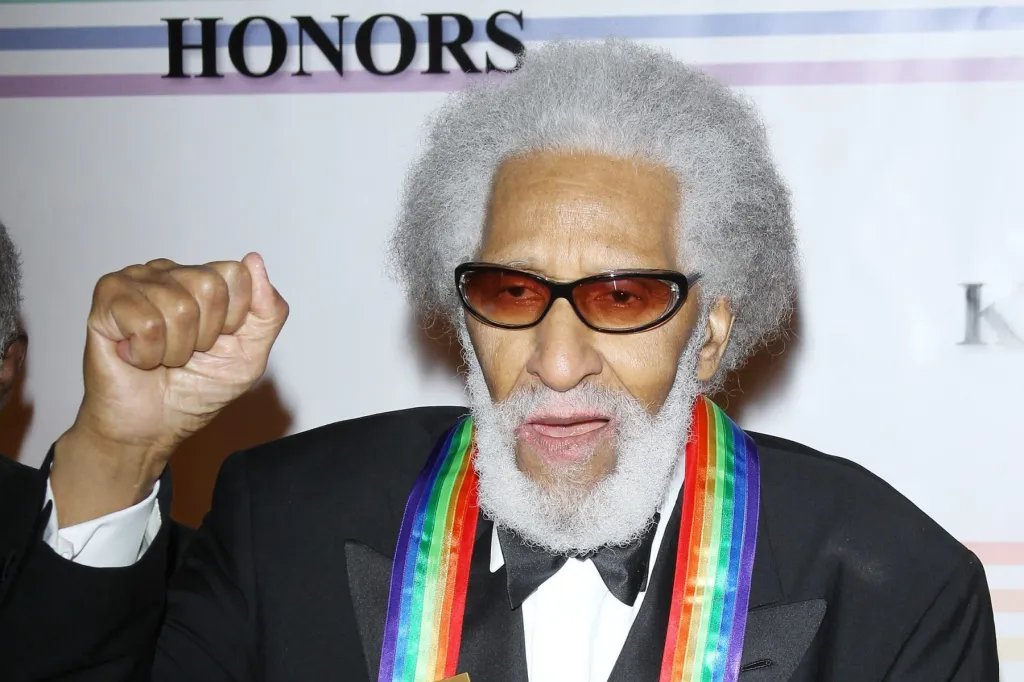

Sonny Rollins, the tenor saxophonist whose combination of technical mastery, melodic invention and raw improvisational power made him one of the most consequential figures in jazz history, died Monday (May 25) at his home in Woodstock, New York. He was 95. His death was announced on his official website. Rollins had been living with pulmonary fibrosis.
His passing marks the end of a direct line to jazz’s post-war golden age. Rollins came of age alongside Miles Davis, John Coltrane, Thelonious Monk, Dizzy Gillespie and Charlie Parker — and outlived them all, spending the decades after their deaths as a living link to that era’s creative revolution.
In a career that stretched from his first professional recordings in 1949 through his final public performance in 2012, he released more than 60 albums as a leader and remained an active presence in jazz culture well into his later years.
Born in New York City on Sept. 7, 1930, to parents who had emigrated from the U.S. Virgin Islands, Rollins grew up in Harlem and came to the saxophone in his early teens — first the alto, then the tenor, which he adopted in his mid-teens and never abandoned. By the time he finished high school at Benjamin Franklin, he was already recording. His earliest sessions in 1949 included work alongside singer Babs Gonzalez and pianist Bud Powell, and he was performing with Monk before the age of 20.
The decade that followed established him as one of the instrument’s pre-eminent voices. His 1956 album Saxophone Colossus — recorded for Prestige in a single session — is considered one of the essential documents in all of jazz, and the track “St. Thomas,” a calypso-inflected original, became one of the music’s most enduring standards.
That same year he recorded Tenor Madness, a historic session that placed him alongside Coltrane in direct musical conversation. Way Out West (1957), A Night at the Village Vanguard (1957) and The Freedom Suite (1958) followed in quick succession, each adding new dimensions to his reputation.
In 1959, feeling he had reached a plateau, Rollins stepped away from performing — seeking a place to practice alone, he found one on New York’s Williamsburg Bridge, where he played through the night without fear of disturbing anyone. His 1962 return was marked by the album The Bridge, which announced not just a comeback but an artist who had been quietly, privately working to push further. It was characteristic of the way he approached music throughout his life — restless, unwilling to settle, always in pursuit of something just ahead.
He won the Grammy Award for Best Jazz Instrumental Album for This Is What I Do in 2001, the Grammy Lifetime Achievement Award in 2004, and the Grammy for Best Jazz Instrumental Solo for “Why Was I Born” — from Without a Song: The 9/11 Concert — in 2006, the same year he swept DownBeat’s readers poll. In 1995, New York City Hall named a day in his honour. In 2017, he donated his personal archives to the Schomburg Center for Research in Black Culture in Harlem.
His wife Lucille, his partner of nearly 40 years, died in 2004.