



Two-time Grammy-nominated reggae star Protoje has spent the past 15 years valiantly merging classic reggae with contemporary audiences’ increasingly cross-genre sensibilities — but his newest LP feels like the first album he’s made primarily for himself.
Led by buzzy singles “Feel It” and “Big 45,” The Art of Acceptance arrived on April 17 via Ineffable Records and the singer’s own In.Digg.Nation Collective. Featuring collaborations with Damian “Jr. Gong” Marley, Shenseea, Masicka and Jesse Royal, the new record delivers 13 poignant musical manifestos rooted in Rastafari principles and first-hand experiences of grief and growth. From incisive takedowns of fascism (“The Locusts”) to hard-sought inner peace (“Ten Times Around the Sun”), Acceptance traces an emotional arc that keeps Protoje’s life in tune with more sprawling ruminations and revolutions of all kinds.
“I’ve lived to see people showing love no longer be the default; love is the rebellion,” he proclaims. “Reggae music is about struggle and oppression, but it is always yearning for love and reconciliation. My music balances those things. There cannot be peace without justice, so we have to fight for both. The world is in chaos, and Babylon is falling, but what are we going to do now? What do we build in its place for the next era?”
Protoje’s new album arrives four years after his last solo studio project, 2022’s Third Time’s the Charm, marking his first full-length since parting ways with RCA that same year. Since returning to full-time independent status (In.Digg.Nation exclusively licenses its releases to Ineffable), the St. Elizabeth-hailing star has doubled down on uplifting local contemporary reggae talent, launching his Lost in Time Festival in 2023. Billboard attended this year’s Lost in Time staging at Hope Gardens in Kingston, Jamaica, which featured a set from enigmatic reggae savant Chronixx — his first local live performance in seven years. Protoje’s commitment to bridging generations of reggae lovers is evident throughout The Art of Acceptance, from the Griselda-nodding hip-hop influences peppered across James’ soundscape to the uplifting, anthemic feel of “At We Feet.”
As he wraps the final month of his 46-date Reggae Invasion Tour across Europe, the U.K. and the U.S., Protoje took a moment to chat with Billboard about his Hot 100 goals, an upcoming visual album and how his recent Ethiopian Christmas helped bring The Art of Acceptance to life.
When did it start to feel like you had a new album coming together?
When [producer] Winta [James] sent me the first beat, which was “The Locusts.” I heard that and knew I wanted to write a new album. I have enough songs for multiple albums sitting in my hard drive, but when I heard that beat and those lyrics, something clicked. [The opening lyrics], “Rastafari teach I how to forgive/ I’ve been learning how to live and let live,” were already there because Winta had started fleshing out the idea for the song. And we haven’t been in the studio together since my 2018 album, A Matter of Time. So, that beat was the first sign that we were onto something. Then we did “Big 45,” and I did “Feel It” with my band, and we were on our way.
How did your trip to Ethiopia inspire that song in particular?
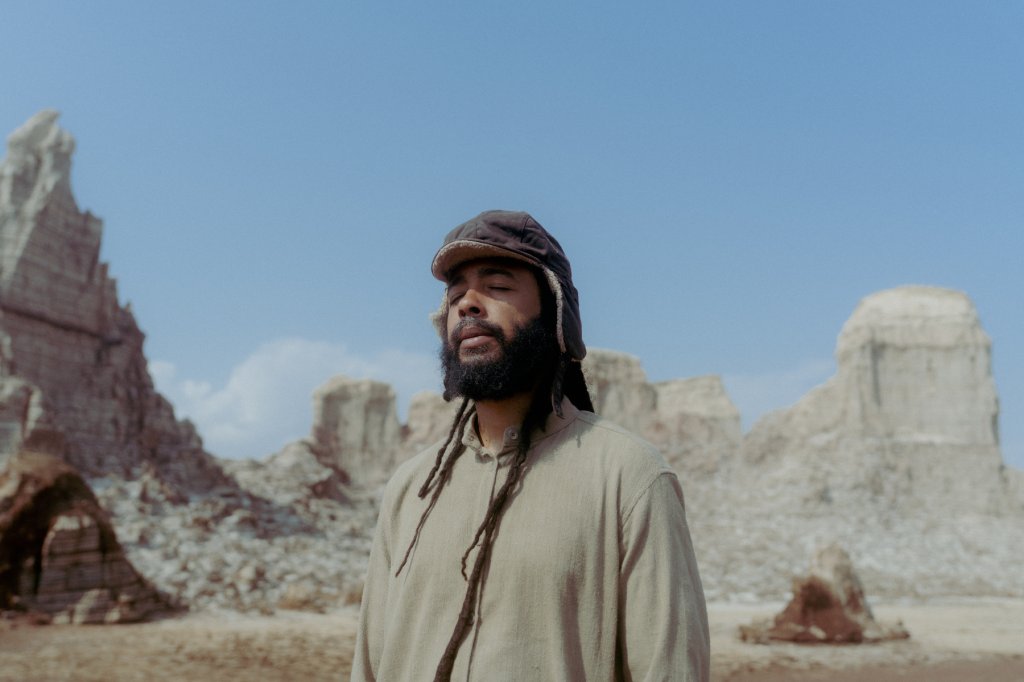
“The Locusts” started before my trip to Ethiopia, but it got finished there. “Reference” also got finished there. When we started to work on these songs, I wanted to go to Ethiopia because I saw where the music was taking us. I wanted to go there and see what else I could gather inspiration-wise. We had an Ethiopian Christmas and saw everything: Timkat, Lalibela, Afar, etc. And we documented everything, so now we have dope visuals for every song. Being in Ethiopia grounded me, my spirit and beliefs, and my faith. I felt invincible afterwards; I wasn’t worried about any pressure related to music. I did something to feed my spirit; what higher art can you do? I felt so free and liberated, so whatever else comes from this album is just a bonus.
What makes you and Winta such strong collaborators?
His vision for songs, melodies and beats is so tough. And we connect on the same wavelength; we never have to meet each other anywhere. We first started to bond over our love for Sly & Robbie and Channel One. Even when it comes to hip-hop, we have the same taste. We’re both really into Griselda and what Daringer is doing. You can hear those creepy, minor chords on “Locusts.” There’s no tug of war; both of our favorite album from last year was [Freddie Gibbs & The Alchemist’s] Alfredo II. When you have that type of chemistry musically, it translates into the studio naturally. Between that and his experience, that’s why he’s my main producer.
What was the last song you added to the track list?
We actually finished “The Locusts” last, but the last songs we added to the tracklist were the Shenseea and Gong [collaborations]. We had 10 songs ready, but we were trying to figure out which song Damian [Marley] would fit on. I was thinking either “The Locusts” or “Sword & Shield,” but when he heard them, he said, “I think these are songs you would want to hear me on instead of what we would sound good doing together.” He wanted to go for something universal and unmistakably reggae.
I went back to the drawing board with Winta, and we came up with “At We Feet” and decided to make that a collaboration. Winta also thought I needed a one-drop rhythm on this project, so we sought out Shenseea for “Goddess.”
Masicka and Shenseea both appear on The Art of Acceptance. Why do you think they’ve become the go-to male and female collaborators, respectively, in contemporary dancehall?
Every time Masicka does a feature, he lifts the song and stays on topic. He listens to the original verse and chorus and shares a perspective on that specific journey. He’s flawless on every feature. With Shenseea, I’ve never heard her on a reggae one-drop like “Goddess.” She’s done reggae before, of course, and that’s what indicated to me that she could get the back-and-forth vibe of “Goddess.” She also lifted the song and added her personality to bring it to the next level.
You also link up with Jesse Royal (“Something I Said”) on the opener. Where did those ‘70s soul influences come from?
That was another Winta idea — and I didn’t even want to do it at first. I didn’t want to talk about what people expected or wanted from me. I was like, “Bro, I don’t care to answer to nobody,” and he was like, “Yeah, because you’re at that point of acceptance now. But you weren’t two years ago, so let’s talk about where you were, and finish the album with where you are now.”
I remember my bass player came to the studio and pointed out how soulful and almost jazzy the chords felt. And Jesse just embodies the energy of the song, and he’s always around — so, of course, I had him jump on the song.
How did you come up with the album title?
It just came to me. I don’t want to give too much away, because it’s a whole thing, but dealing with the stages of grief, there’s denial, acceptance, forgiveness, etc. I didn’t want to focus on denial because I got past that, and it wasn’t helping me at all. I wanted to start a new chapter and journey of acceptance. I want to explore how I dealt with these heavy moments through reasoning, philosophical conversations and therapy. In that journey, I found that forgiveness really is the key to everything, but before I got there, I wanted to focus on acceptance.
What’s changed about your creative process this time around?
A lot less sampling, and mostly live instruments. It was a natural choice, but I wanted to be a bit more mindful and creative. My mom [Jamaican singer and lawyer Lorna Bennett] clears all my samples, and she hates all that anyway. [Laughs]. There are heavy ‘90s Steely & Clevie influences, some Gussie Clarke too, and there will forever be Sly & Robbie across my projects. I wanted that Griselda/Wu-Tang type of sparse, almost out-of-tune keyboard on the album as well. This is the album I wanted to make for a long time. I finally did an album where I’m not focused on the next album.
What would a Grammy mean to you for this particular record?
A Billboard Hot 100 [hit] would mean way more to me. A Grammy is not at the forefront of my goal; it never has been. I know the Grammy system and what it means. But it would mean a lot to my mom. I’m thinking about cultural impact and big songs; I want music to be relevant to elders, the youth and my peers. I want to see conversations and ideas sparked by the messages on my project. A Grammy would not make me feel any more accomplished than I am. But I like for my mother to get what she wants!
What were some of your biggest takeaways from your time in the major label system?
I only went to RCA because of Archie Davis, who helped me set up a label deal for myself and the artists I had at the time, including Sevana and Lila Iké. When he left to work with Tunji [Balogun] at Def Jam, RCA became a very different place for me to exist. I also didn’t have a key man clause [a contractual provision that allows an artist to terminate their agreement if a specific individual, normally the person who signed them, leaves the company] at the time, so it was challenging navigating the label without the person who signed me.
Another issue major labels generally have is that they don’t really know what to do with Caribbean music. But that wasn’t necessarily the case for me because I got to keep my masters and creative control. I learned a lot from being there, but I always knew I was never interested in a major. The deal made sense at the time, and truly naturally ran its course.
What’s next for In.Digg.Nation this year?
I did visuals for every song on the album, and we’ve arranged it as one continuous viewing. I held some screenings in Jamaica, and would love to do a few in America, too. More singles and individual music videos are coming, too. Lots of touring as well.