



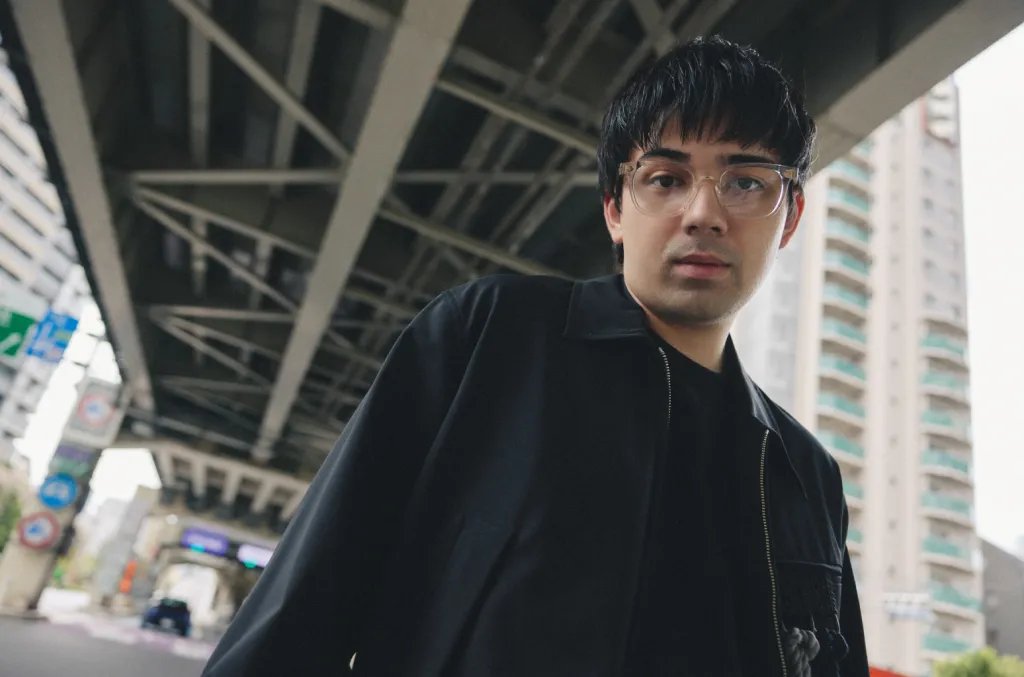

Unbound Japan is an interview series featuring entertainment industry professionals based outside the country and those sending Japan’s music out into the world. This instalment features music producer Taka Perry. Born and raised in Australia to an American father and a Japanese mother, he built his career as a producer there before expanding his work to Japan. In 2024, “Touch” by global girl group KATSEYE, which he wrote and produced, became a massive hit. The 28-year-old producer spoke about his career and creative process in this interview with Billboard Japan and shared how Japanese music looks to him as someone born in Australia and raised on Western music culture.
Your launched your career in Australia, where you’re from.
I was born and raised in Canberra and lived there all the way through high school. Canberra is the capital, but it has a relatively small population. I’d wanted to do music ever since high school, but in Australia, most people who want to pursue music go to Sydney or Melbourne in order to do it. I chose Sydney and moved there shortly after graduating high school.
When did you first become interested in music production?
I played clarinet from elementary school, but in junior high I started teaching myself guitar because I wanted to be in a rock n roll band. From there I branched out into bass and piano, and formed a band with friends covering Red Hot Chilli Peppers and Nirvana. I wanted to record our own songs, and after my parents bought me a DAW for my 12th birthday, I got hooked on songwriting and production. I then gradually became more drawn to working behind the scenes than to being in a band.
When did you start branching out to Japan?
I started seriously thinking about working in Japan around 2019–20, right before COVID. I’d been a producer in Australia for four or five years by then and was getting some great results. But the industry there is limited in size, so once your career reaches a certain point, a lot of people move to L.A. or London, or more recently, South Korea. I speak Japanese and I’m familiar with Japanese culture, so I felt it would be a waste not to get involved in the Japanese scene.
Back then, I looked up to JP THE WAVY and WILYWNKA, and started doing sessions in Japan with the goal of becoming a hip-hop beat-maker. I’d come to Japan three or four times a year, for three or four weeks each time. I’d DM artists, do sessions with them, then fly home. As I kept that up, I ended up with more work from Japan than from Australia. I decided I needed to live in Japan, both for my career and personally, so I moved my base here last year.
After working in the music scene in Australia, did you face any difficulties when you began working in the Japanese one?
By the time I decided to start making music in Japan, I was lucky enough to have already had results and credits as a producer in Australia. If I’d taken that to the U.S., say, it would have carried over to some extent, since both are Western music and both are English-speaking. But when I came to Japan, a lot of the time it didn’t register with Japanese artists or industry people. So the hardest part for me and my longtime management, was rebuilding the career I’d built up from scratch. Doing so with no publisher to help navigate such a unique industry is something we’re incredibly proud of.
We’d also like to hear about some of the songs you’ve produced. Australian artist Ruel’s “Younger,” released in June 2018, won the Breakthrough Artist award at Australia’s ARIA Music Awards and was certified multi-platinum by the Australian Recording Industry Association (ARIA). How did you come to be involved in producing it?
I met M-Phazes, who had been Ruel’s producer for years, once at a co-writing camp. After that, I regularly sent him demos and playlists. When he was working on Ruel’s EP, he invited me along, like, “If you’re up for it, why don’t you come to the studio for a couple of days and we’ll make some stuff together?” I didn’t know how the things we made in those two days would be used, but later he told me, “We’ve decided to use your parts from this song and this song.” Those were “Younger” and “Not Thinkin’ Bout You.” After the release they started charting, and “Younger” was certified multi-platinum when I was 20.
And then there’s KATSEYE’s “Touch,” which became a huge hit worldwide. Did you have a sense of the song catching on worldwide as it was happening?
I did. I was a NewJeans fan, and I wanted to make some NewJeans-style tracks, so I did a session in Sydney with a songwriter friend to write some toplines over some musical ideas of mine. One of the songs from that session was the demo version of “Touch.” My friend sent it to producer Cashmere Cat, who liked it too. He played it for the head of HYBE, whom he knew. He liked it as well and said he wanted to use it as the signature song for a pre-debut group called KATSEYE. But since they hadn’t made their debut yet, I had no idea at that point how big the release would be. So until it came out and started going viral in various countries, I had no way of predicting what would happen. I was watching social media in real time every day and was like, “They’re the most-streamed groups in the world again today!”
So it was a big hit born out of personal connections. Do you work on a lot of K-pop projects like that?
I produce in South Korea regularly too. Right after KATSEYE’s “Touch” came out, I was going there for sessions about as much as I was doing them in Japan. Some of that work has led to releases, but in Korea almost everything goes through competitive pitches. And since K-pop has grown into a global operation, it’s not just Korean producers and songwriters. I think Americans, Brits, Swedes and others are doing sessions in Seoul every day.
Japanese artists have become increasingly globally minded lately. Do you think about including elements aimed at overseas markets?
It’s not something I do deliberately, but I make music that keeps a Japanese feel while still having a truly global sound and easy for overseas listeners to take in. It’s a balance I’m personally happy with.
Where do you think that “Japanese feel” comes from?
In concrete terms, it’s things like packing in a lot of information, or having the key change in the chorus. I think Japanese music is strong lyrically. Overseas, it’s almost unheard of for the lyrics to change between the first and second chorus. Or for the key to change only in the third chorus. Japanese music is complex. I think that’s a good thing, because it’s part of its identity.
We’re hoping that people aiming for the world stage will read this series and come away encouraged. If you were to give advice to someone who wants to take on a challenge abroad, what would you say?
First of all, if you want to take on a challenge abroad, I think it’s really important to actually go to the place where you want to do it. These days you can build all kinds of relationships on social media, but if you want to work in L.A., for example, go to L.A. and make connections there. In terms of music production, collaborations can now happen entirely remotely. Even so, I think working face to face, where you can see each other’s expressions, produces songs with more creative soul. It’s important to go to all kinds of places, connect with all kinds of people and make songs together.
Is there anything you’d like to take on next?
I’d be really happy if I could play an active part in bringing the Japanese music scene further onto the global stage. I don’t think there are many bilingual producers based in Japan that have a huge focus on this. I’d like to put my unique strengths to use in these situations and forge more collaborations between Japan and other countries and introduce more Japanese music to artists overseas.
—This interview by Sakika Kumagai first appeared on Billboard Japan