



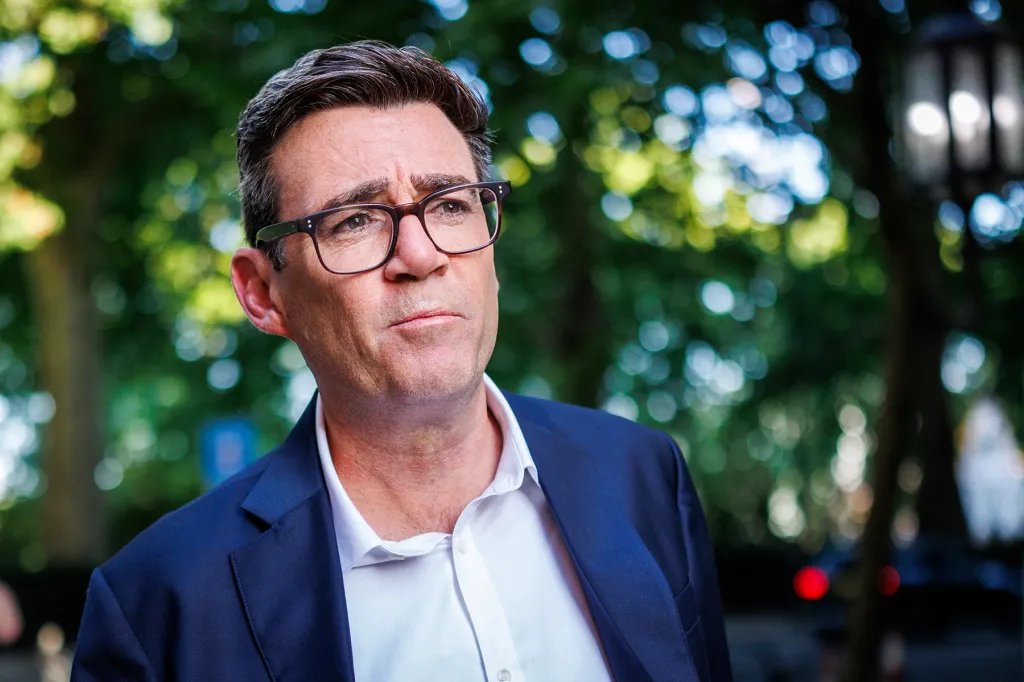

Few, if any, modern British politicians have cultivated as visible a relationship with music as Andy Burnham. On Monday (July 20), the former mayor of Greater Manchester assumed the role of prime minister of the U.K. following the resignation of Keir Starmer, and his longstanding affinity for these isles’ rich musical heritage — and the wider industry that underpins it — has taken on renewed significance.
Burnham’s appointment in the role has given the U.K. music industry belief that the sector can remain central to the U.K.’s policy agenda. “We hope he backs our music-makers on a wide range of issues, from streaming and ticketing reform to protecting their rights in AI licensing deals,” says Annabella Coldrick, chief executive of the Music Managers Forum.
Coldrick says that Burnham’s previous stint as culture secretary is a “huge positive” in the eyes of the MMF and its members. She believes the tenure would have given him “a strong understanding of how the U.K. music industry operates, including the critical role of managers, and the importance of ensuring artists, songwriters, musicians and producers can make a viable living from their craft.”
Burnham began his political career in 2001 as a Labour MP for Leigh, located near Wigan, and he went on to assume the role of chief secretary to the Treasury. In 2008, he was appointed the role of culture secretary, then he was promoted to health secretary. In 2017, he was elected mayor of Greater Manchester, a role he held for nine years.
Throughout his political career, Burnham has become known for his tendency to litter interviews and speeches with reminiscences of his teenage love of indie rock. In 1989, he stood in the crowd of The Stone Roses’ show at Blackpool’s Empress Ballroom, telling The Guardian that it was “probably the best gig I’ve ever seen,” and also attended The Smiths’ concert at Salford University three years earlier that coincided with their landmark album, The Queen Is Dead.
Burnham’s love of music has continued to last — more recently, he did a ranking of other legendary Manchester acts on TikTok, putting Oasis on top. He shared the stage with The 1975 at the city’s Parklife Festival in 2017 honoring victims of the Ariana Grande concert bombing. During his time as mayor, Burnham led a Greater Manchester delegation to SXSW in Austin, Texas to officially unveil the region’s Beyond The Music festival, while also overseeing the arrival of Factory International, which operates state-of-the-art venue Aviva Studios, affirming Manchester’s place as the U.K.’s second city in regard to musical culture. In the final months of his term, Burnham played a key role in bringing the BRIT Awards to the Co-op Live in February 2026, the first time the event had taken place outside of London.
The challenge will be whether Burnham’s vision for increasing music’s role and influence in civic life can be scaled into national policy. “As anyone who’s heard him speak about the Stones Roses or The Pogues will attest, Andy Burnham genuinely loves music — arguably more so than any previous prime minister,” says David Martin, CEO of the Featured Artists Coalition. “We saw plenty of evidence of this passion during his time as mayor of Greater Manchester, particularly with his enthusiasm for local artists. This is someone who understands music’s power on local, national and international levels, but also, instinctively, as a fan. That feels really, really important.”
The idea looms as Burnham, recently elected as an MP for Makerfield, Greater Manchester, following his resignation from the mayoralty, takes office after winning the backing of 349 his party’s MPs. On Friday (July 17) he was named leader of the Labour Party and promised to “bring back hope” to voters of the left-leaning organization.
A focus on economic pressure feels particularly relevant for the U.K. music industry. While the sector continues to grow, the pace slowed to 5% year on year in 2025 after several years of double-digit gains, according to trade body BPI. Last Monday (July 13), the government announced that the Music Growth Package, which was first unveiled in the Creative Industries Sector Plan last June, would receive an additional £15 million ($20 million) beyond its original allocation, bringing total funding to £45 million ($60 million). The investment will support more than 2,000 music projects over the next three years.
The collective message from the industry is that it’s time to move forward and get to work. The Music Growth Package forms part of “a succession of well-meaning announcements over the past two years,” Coldrick adds, referring to the 2024 Labour party manifesto, which included a proposal to ban ticket touting and increase support for acts touring Europe, which has become increasingly challenging post-Brexit. Labour also backed the Music Venue Trust’s proposed £1 ticket levy on arena and stadium shows to help support the grassroots music scene, but the sector still wants to “see tangible action” when it comes to supporting creators themselves. Adam Webb of the Fan Fair Alliance says Burnham’s appointment gives him “real hope that we’ll now see progress” in delivering the proposed ticket touting ban into law.
Youth Music’s interim co-CEO, Carol Reid, concurs. The organization invests in grassroots music projects across the country and established the Open Doors Fund in partnership with Spotify in 2025. In its first year, the initiative has helped to bring the number of youth spaces — which kick-started the careers of Little Simz (Mary’s Youth Club, Islington) and Ezra Collective (Tomorrow’s Warriors) — at risk of closure down from 41% to 37%, while opening up 137 jobs for next-generation creatives.
Reid says that she admires the work Burnham has done to amplify Manchester’s music ecosystem, but she “hopes to see that same ambition nationally.” Research from a 2026 Youth Music survey states that, in the U.K., there are currently upwards of 33,500 young people on waiting lists for various mentorship programs, with those outside major cities disproportionately affected. A recent Open Doors event at Spotify HQ in London brought together artists aged 18 to 25 with industry professionals for career development sessions, but Reid argues that sustained, nationwide investment is needed to ensure emerging talent can access the same opportunities regardless of where they live.
“People say talent is everywhere, but opportunity is not,” she continues. “At Youth Music, we’d go further: demand is everywhere, but resources are not. We see the talent that exists across the country, but too many young people still face barriers to opportunity. We want to see more collaboration across the music industries, alongside long-term investment in the grassroots music projects developing the artists and industry leaders of tomorrow.”
The Ivors Academy is also calling on Burnham to “put music creators at the heart of [the government’s] strategic priorities,” as CEO Roberto Neri tells Billboard U.K. In June 2025, the rights association, whose mission is to “protect, empower and celebrate songwriters and composers,” secured a £75 ($100) daily per diem payment for songwriters from U.K. major labels — the first time this type of payment had been formally agreed anywhere in the world.
The move was endorsed by RAYE, while in May, the Ivors Academy honored Sir Elton John with the title of the Academy’s first president, in recognition of his advocacy for artists’ creative rights in the age of AI. “As a politician who seems to understand music’s value to our culture, society and economy, we look forward to working with Burnham and his team,” Neri adds. “Songwriters and composers are the foundation of the music industry. We need this government to recognize their essential contribution to the country’s creative and economic success while protecting their rights.”
Burnham’s reputation as a genuine music head may not, on its own, translate into policy action. But it has helped to build a stronger rapport across areas of the industry. For industry professionals, that goodwill comes with heightened expectations, and the priorities remain clear: protecting creators’ rights and strengthening grassroots infrastructure across the U.K. The appetite for change is apparent, but now comes the task of delivering it.