



For three days, the city of Lecco, in northern Italy, became one of the epicenters of live music in Europe. By the end of Nameless Festival 2026, one thing was clear: the event had achieved something many festivals struggle to pull off – growing larger while staying true to the identity that made it successful in the first place.
After years of expansion and increasingly ambitious editions, organizers made a bold decision this year by bringing the festival back to its original home at Lecco’s Centro Sportivo Bione, the venue where Nameless first began its journey in 2013. The move proved to be a winning one. Thousands of attendees, mostly aged 18-35, from across Italy and around the world, descended on the city, transforming the shores of Lake Como into a vibrant hub of music, culture, and community. International participation was particularly strong, with 25% of attendees traveling from abroad and a remarkable 10% coming from the United States alone, according to the organizers.
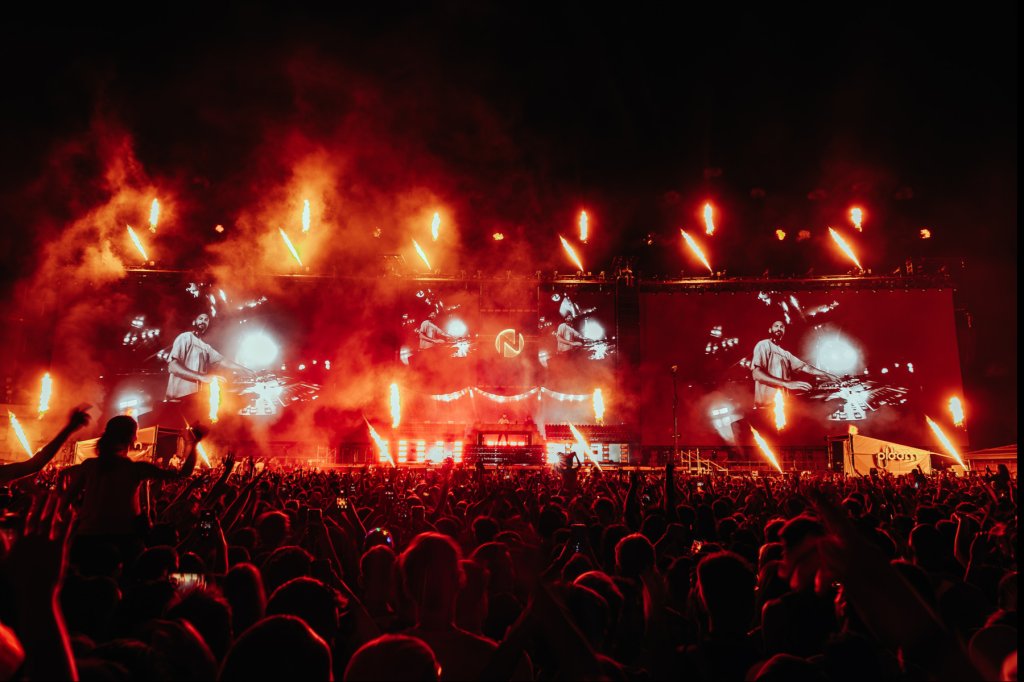
Billboard Italy attended the festival since the inaugural date of Saturday, May 30, and from the moment the gates opened, the excitement surrounding the return to Bione was impossible to miss. Long lines formed at the entrances, several areas quickly reached capacity, and a steady stream of festivalgoers moved between the event’s five stages. The atmosphere felt less like a regional event and more like one of Europe’s established major festivals.
Courtesy of Nameless Festival 2026
What stood out most was the diversity of the crowd. While Nameless continues to attract an increasingly international audience, it has managed to preserve the sense of identity and community that longtime attendees have come to associate with the festival.
Friday’s opening day drew massive crowds, thanks in large part to the return of Calvin Harris, arguably the most anticipated artist of the entire weekend.
The Scottish DJ and producer made his long-awaited return to Italy after more than a decade, choosing Nameless as the stage for his comeback. As the lights dimmed on the Ploom Stage and the first notes of his set rang out, a sea of fans packed the festival grounds.
Harris crafted a performance that spanned more than fifteen years of chart-topping hits, seamlessly blending recent releases with the tracks that helped define modern dance music. Songs like “Summer,” “Feel So Close,” “Sweet Nothing,” and “We Found Love” sparked a wave of collective nostalgia among millennial fans, many of whom grew up with those records as the soundtrack to their teenage years.
But nostalgia alone doesn’t explain Harris’ appeal. The younger generation was equally engaged, singing along to every lyric and anticipating every drop. The performance became more than a greatest-hits-set – it was a celebration of electronic music’s enduring ability to connect audiences across generations.
Reducing Nameless’ success to its biggest names would miss the bigger picture. One of the most impressive aspects of the 2026 edition was how effectively the festival spread attention across its entire site. Whether attendees were exploring the house-driven sounds of the Red Bull Energy Zone, the bass-heavy programming inside the Nameless Tent, or the urban and pop performances at the Garnier Fructis Arena, there was a clear sense of variety and intentional curation throughout the weekend.
The “Less Names” concept, featuring surprise guests whose appearances were kept secret until showtime, also played a significant role in maintaining excitement. The unpredictability has become part of Nameless’ DNA, giving fans a reason to stay curious and engaged throughout the event.
If day one delivered the biggest headlines, day two offered perhaps the clearest demonstration of how far Nameless has evolved. As the day unfolded, it became increasingly evident that the festival no longer depends solely on its headliners, which included John Summit, Halō and Pendulum. Attendees moved organically between stages, discovering both established international acts and emerging artists. The energy never dipped, regardless of who was performing – a subtle but important sign of a festival that has reached maturity.
Courtesy of Nameless Festival
By now, Nameless feels fully aware of its place within the European festival landscape. It is no longer an up-and-coming event trying to prove itself. It has become a destination in its own right. The festival’s final day maintained the momentum, delivering another packed schedule (that included headliners Fisher, Chris Lorenzo and Svdden Death) and reinforcing the consistency of the entire weekend.
As the closing performances unfolded and attendees prepared to say goodbye to another edition, the atmosphere became increasingly celebratory. Beyond the excitement of the music itself, there was a palpable sense of appreciation for the people who have spent years building Nameless into what it is today.
One of the most memorable moments came after the final sets had ended, when festival staff gathered to applaud CEO Alberto Fumagalli. The spontaneous tribute served as a reminder that behind the impressive attendance figures, sold-out stages, and international reputation stands a long-term vision that has transformed Nameless from an independent passion project into one of Europe’s most respected music festivals.
Ultimately, the success of Nameless 2026 cannot be measured solely by attendance numbers, major artists, or economic impact. The festival’s most meaningful achievement may have been its decision to return home. Bringing the event back to Lecco represented both a risk and a statement of identity. The overwhelming response from attendees confirmed that the choice resonated.
Judging by what unfolded on the shores of Lake Como this past weekend, this homecoming feels less like a return to the past and more like the beginning of a new chapter – one that will continue to unfold when Nameless Festival returns on June 4, 5, and 6, 2027.