

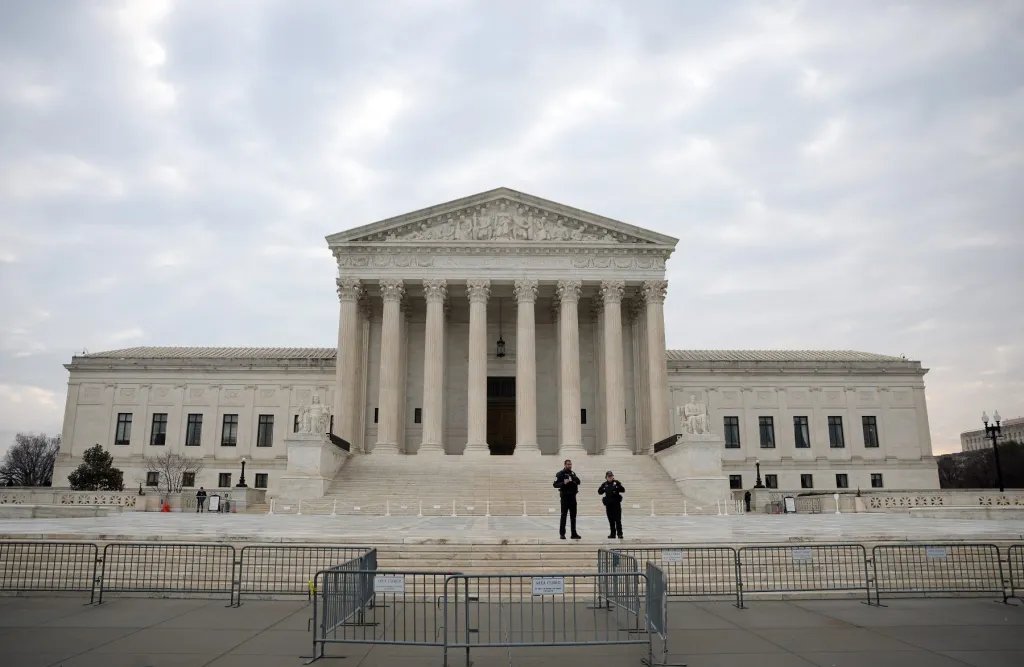

THE BIG STORY: Over the course of less than a week, America’s major music companies lost one Supreme Court case and teed up another.
On Wednesday (March 25), the high court rejected a billion-dollar lawsuit the labels filed against telecom giant Cox Communications, ruling that the internet service provider cannot be held responsible for music piracy by its users.
In the decision against Universal Music Group, Sony Music Entertainment and Warner Music, the justices unanimously overturned an earlier ruling that held Cox liable for thousands of songs illegally shared by its users — a decision that led a staggering $1 billion infringement verdict in 2019.
Then on Monday (March 30), the labels orchestrated an unorthodox legal maneuver in an effort to get the Supreme Court to overturn the recent landmark appeals court ruling in Vetter v. Resnik, which said that musicians can enforce U.S. copyright termination rules across the globe.
The first-of-its-kind decision, won by songwriter Cyril Vetter, adopted a novel legal theory that artists can use termination rights to regain not only their American copyrights, but also their overseas rights to the same songs, overturning decades of legal precedent and industry practice.
Faced with that ruling but with no way to appeal it, the labels got creative: They bought out the small publisher who lost the case to Vetter, with the stated goal of taking the case to the Supreme Court.
In many ways, the Cox case was already old news. It was filed nearly eight years ago, and with the entirety of recorded music available instantly for $12.99/mo, illegal downloading just isn’t the existential threat it once was. The Vetter case, on the other hand, raises huge new questions for an era of booming catalog valuations, especially as songwriters and artists become more and more aware of their ownership rights. (Thanks, Taylor.)
Whether the high court actually takes the case, of course, remains to be seen. Stay tuned.
You’re reading The Legal Beat, a weekly newsletter about music law from Billboard Pro, offering you a one-stop cheat sheet of big new cases, important rulings and all the fun stuff in between. To get the newsletter in your inbox every Tuesday, subscribe here.
Other top stories this week…
— Drew Findling’s client list is something to behold: Cardi B, Offset, Gucci Mane, Lil Nas X, Lil Durk, GloRilla and Rod Wave, among others. So Billboard’s Rachel Scharf sat down with him to talk about the complexity of doing criminal defense work in the music business, the problem with all those RICO cases, and why he hates when prosecutors cite rap lyrics: “I think it is unfair and absolutely racist.”
— UMG and other music publishers formally laid out their argument in their copyright case against Claude maker Anthropic on whether AI training counts as “fair use” — the critical question in that case and the potentially trillion-dollar question looming over the entire AI industry.
— The estate of Bob Marley sued a cannabis company called Tilray, claiming it owes nearly $11.3 million in unpaid licensing fees for the late Jamaican music icon’s official marijuana brand, Marley Natural.
— UMG fired back at Drake’s appeal seeking to revive his defamation lawsuit over Kendrick Lamar’s “Not Like Us,” arguing the superstar is trying to “critically undermine” the art of hip-hop because he’s upset he lost a rap beef.
— Live Nation’s blockbuster antitrust trial chugged along in Week three, featuring testimony from the new CEO of Oak View Group (OVG) about the company’s controversial client-steering arrangement with Ticketmaster and the start of Live Nation’s defense case.
— Latin music is soaring in popularity, so it makes sense that stars like Bad Bunny are embroiled in a growing number of major legal battles in U.S. courts. Here’s a quick recap of the biggest Latin music lawsuits and criminal cases you need to know.
— The executors of Michael Jackson’s estate ripped Paris Jackson for complaining about their spending on the long-anticipated biopic Michael, arguing her recent objections “betray a complete lack of understanding about how the motion picture industry works.”
— Taylor Swift was hit with a trademark lawsuit claiming the name of her record-smashing latest album, The Life of a Showgirl, has drowned out a touring cabaret show called “Confessions of a Showgirl.”
— A judge ruled that Cardi B can recover trial fees totaling nearly $20,000 tied to her court victory over Emani Ellis, a security guard who accused her of assault but quickly lost at trial last year.
— In other Cardi legal news, the rapper won a court order throwing out a lawsuit that claimed her hit 2024 single “Enough (Miami)” copied an earlier track called “Greasy Frybread.” When will people learn to stop suing Bardi?
— YNW Melly’s legal team launched a new effort to free the rapper on bail while he awaits trial in a long-running double murder case. The case, over whether he killed two of his close friends, has already seen the star sit in jail for more than seven years without a conviction.
— The company suing Miley Cyrus over claims that her song “Flowers” ripped off Bruno Mars’ “When I Was Your Man” asked a judge reject her efforts to dismiss the case, citing “undeniable similarities” between the two songs.
— FKA Twigs reignited her legal battle with Shia LaBeouf, filing a new case that claims the actor is trying to silence her by enforcing a non-disclosure agreement from a previous settlement that she says is illegal.
— A former hypeman who sued Fat Joe over shocking underage sex allegations — accusations the star has called part of an extortion scheme — quietly dropped all reference to such allegations in a new version of his lawsuit.
— A co-writer and featured artist on El Chombo’s 2018 chart-topper “Dame Tu Cosita” claimed in a new lawsuit that Payday Publishing owes him at least $3 million in unpaid royalties for the song.
— Rob Toma and Mike Vitacco, the longtime friends behind New York dance events company Teksupport, are no longer getting along — and now they’re messily litigating the terms of a business divorce.
— The University of Southern California (USC) settled a lawsuit from Sony Music claiming its sports teams used hundreds of unlicensed songs by stars like Beyoncé and Harry Styles in Instagram and TikTok hype videos — one of many such cases filed in recent years.
-A federal judge refused to dismiss MTV’s lawsuit claiming Nick Cannon’s new battle rap show, called Bad vs. Wild, is a “flagrant” copycat of his long-running MTV series Wild ’N Out.